

LOTO is not a burden of management; rather, it is a crucial safety asset for the high-quality development of enterprises.
In industrial safety production management, lockout-tagout (LOTO) is often regarded by some frontline workers as a “cumbersome procedure” or an “efficiency burden”. Many enterprises, in an attempt to catch up with production schedules and simplify operation procedures, randomly omit the steps of energy isolation during equipment maintenance, lockout, tagout verification, etc., with a fortunately mentality of “occasional violations are risk-free”. However, countless safety accident cases repeatedly confirm that omitting the LOTO process will eventually be repaid with heavy costs such as personnel casualties, equipment damage, huge losses, and compliance accountability. Facts have proved that LOTO is never a burden for enterprises; instead, it is the core safety asset that ensures personnel safety, avoids business risks, and guarantees stable production and efficiency improvement.
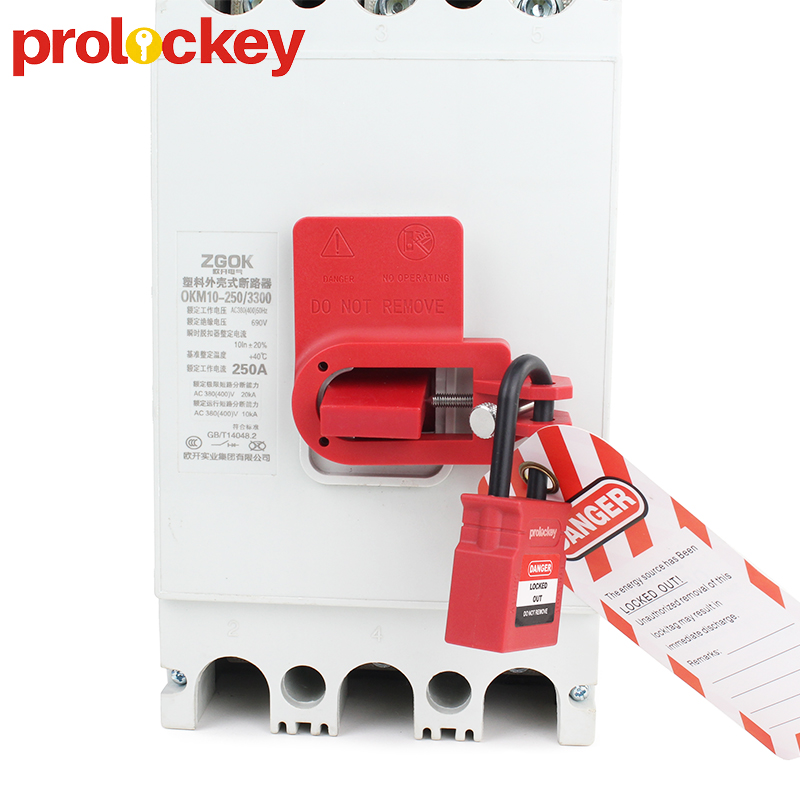
The LOTO lockout-tagout refers to the standardized safety control process for high-risk operations such as equipment maintenance, repair, and fault handling, which involves cutting off various dangerous energies such as mechanical, electrical, pneumatic, and thermal, physically locking equipment switches, hanging warning signs, and verifying the zero-energy state of the equipment. It is also a mandatory compliance measure as stipulated by OSHA international safety standards, ISO45001 system, and the Domestic Safety Production Law. For a long time, some enterprises have prioritized production over safety, viewing the LOTO process as a redundant step that hinders production efficiency. They simplify the entire process of application, approval, lockout, verification, and unlocking, ultimately laying the groundwork for major safety hazards. Fatal accidents in multiple industries such as chemical, mechanical manufacturing, and building materials processing have all originated from the failure to strictly follow LOTO regulations, resulting in unexpected equipment startups, sudden release of dangerous energy, and irreversible safety tragedies.
The seemingly additional operation steps of LOTO control are actually the most cost-effective safety investment for enterprises. From a cost perspective, a standardized lockout-tagout operation only takes a few minutes, requires basic lockers and identification materials, and has a very low cost. However, if an energy release accident occurs, enterprises will face multiple huge losses such as personnel compensation for casualties, equipment shutdown and damage, administrative penalties, and damage to brand reputation. The cost of a single accident is often far higher than the combined cost of thousands of LOTO standard operations. Compared to the devastating risks of the accident, the time and human resources invested in the LOTO process are the most reliable “risk hedging cost” for enterprises.
From the perspective of production and operation, standardized LOTO management is an important support for enterprises to stabilize production, increase efficiency, and enhance quality. Many enterprises mistakenly believe that LOTO slows down production progress. In fact, the opposite is true. Unorganized and non-standard maintenance operations are prone to triggering equipment failures, production line shutdowns, and personnel absenteeism, which significantly reduce production efficiency. In contrast, enterprises that implement LOTO closed-loop management completely eliminate safety hazards in maintenance operations, effectively reducing abnormal equipment damage, sudden shutdowns, and safety-related shutdowns, ensuring the continuous and stable operation of the production line. Data from many industrial enterprises show that after improving the digital and standardized management system of LOTO, the equipment failure rate has significantly decreased, the equipment overall efficiency (OEE) has increased by 7% to 10%, and the safety and standardization of maintenance operations have achieved a double leap.
From the perspective of enterprise development, LOTO is the core strength for enterprises to comply with regulations and achieve long-term development. Currently, safety production supervision is becoming increasingly refined and standardized. LOTO, as the core means of dangerous energy control, has become a key content of enterprise safety compliance verification. Improving the LOTO management system and implementing standardized operations by all employees can not only help enterprises avoid compliance risks and build a safety bottom line, but also hone a rigorous and pragmatic safety culture and enhance the safety literacy and professional capabilities of the team. At the same time, a standardized safety management system is also an important soft power for enterprises to build a good brand reputation, undertake high-quality projects, and achieve large-scale development.
To activate the value of LOTO safety assets, industry benchmark enterprises have abandoned the traditional extensive management model and established a standardized, closed-loop, and digital LOTO control system. By sorting out the specific LOTO operation norms for each equipment, unifying lock standards and warning signs, and clarifying the responsibilities of different levels of positions; establishing a full-closed-loop process of “application – approval – execution – verification – unlocking – archiving” to achieve traceability throughout the operation process; conducting specialized training at all levels for on-the-job employees, outsourcing personnel, and operation teams to eliminate operational blind spots; introducing an intelligent management system to replace traditional paper records, achieving real-time supervision, automatic warning, and data traceability, has completely solved the problems of low efficiency, difficult supervision, and difficult traceability in traditional LOTO management.
Safety is the greatest benefit, and standardization is the best protection. There is no shortcut to safe production. All seemingly “unnecessary” standard procedures are the solid defense lines protecting enterprises and employees. LOTO is not a restraint on production but a hidden asset that ensures the enterprise’s steady and long-term development; it is not an optional formality but a necessary guarantee for safeguarding life, avoiding risks, and enabling production.
In the future, industrial enterprises need to completely abandon the mentality of taking chances and the thinking of extensive management, face the core value of LOTO squarely, and internalize locking and labeling as the operational habit of all staff, solidify it into a regular management system, and upgrade it to a digital control capability. With standardized LOTO management, lay a solid foundation for safety, empower production with a safety color, and truly make LOTO safety assets take effect, safeguarding the enterprise’s high-quality and sustainable development.
Post time: May-30-2026


