

In the group Lockout tagout operation, what is the function of the lockout hasp?
In the industrial field, Lockout tagout (LOTO) is the core measure to protect workers from accidental release of dangerous energy. Most people are not unfamiliar with locks, but when multiple people are simultaneously maintaining the same equipment, the conventional lock faces a fundamental problem: one lock can only hold one key, then what about the second person, the third person?
At this point, Lockout Hasp came into play.
What is Lockout Hasp?
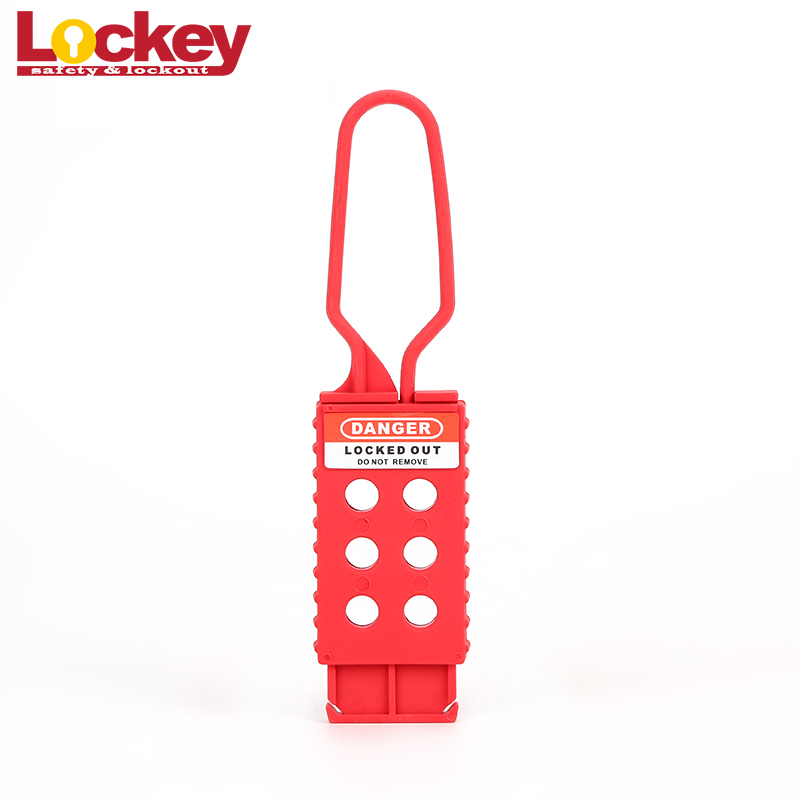
Lockout Hasp is essentially a multi-hole clamp device. It can typically accommodate 2 to 6 locks at the same time. Some models even support more. It is clamped onto the circuit breaker, valve or other lock points at the energy isolation point, and each person involved in the operation then hangs their own personal safety lock.
Before all the locks are hung up, the equipment cannot be restored to power supply; only after all the people have completed their tasks and taken their own locks can the equipment be restarted. This logic is simple, but in actual on-site implementation, it solves the most easily overlooked security loophole in multi-person operations.
The core role of group work
1. Ensure that each person has independent control
This is the fundamental value of latch locks. In traditional methods, a team leader locks the equipment and others “trust” that he won’t unlock it in advance. This is a potential hazard in the system. Latch locks transform this “trust” into “physical constraints” – as long as your lock is still hanging, the equipment will never be started, regardless of what happens on the spot or whether others have completed their tasks in advance.
2. Preventing Misinterpretation of Lock Release
One common scenario in multi-person operations is that Person A assumes Person B has already evacuated, and thus takes the lock away prematurely. This misjudgment is more prevalent in busy maintenance sites than one might expect. The latch lock strictly requires each person to take their own lock themselves, with no room for “having someone else take the lock on their behalf”, eliminating the possibility of premature unlocking due to communication errors.
3. Adaptation to shift handovers and personnel changes
Long-term maintenance projects often span multiple shifts. When one group of workers finishes their shift and another takes over, the locking status of the equipment needs to be seamlessly transferred. The latch lock, in conjunction with the shift handover process, allows the incoming personnel to attach the new lock first, and then the outgoing personnel can take away the old lock. The entire energy isolation process remains uninterrupted.
4. Clearly indicate who is performing the work on site
Each personal padlock usually has the name, employee number or department information engraved on it. By looking at the locks attached to the latches, the on-site supervisor can immediately tell how many people are currently working on the equipment and who they are. This is particularly important in scenarios involving large-scale unit maintenance or contractor mixed operations.
Post time: Jun-23-2026


