

What are the differences between plug locks and circuit breaker locks?
In the energy isolation site of a factory, the two most commonly used weapons for electrical isolation are plug locks and circuit breaker locks. They are both locked onto the electrical circuits and both physically prevent the restoration of energy. They all need to be used in conjunction with warning signs, and the purpose seems the same – to fix the “cannot be powered on” state with locks. But in fact, these two locks are tools of different battlefields, and which one to choose depends on the equipment itself.
One lock is at the equipment end, and the other is at the power supply end.
The most essential difference is the location of the lock.
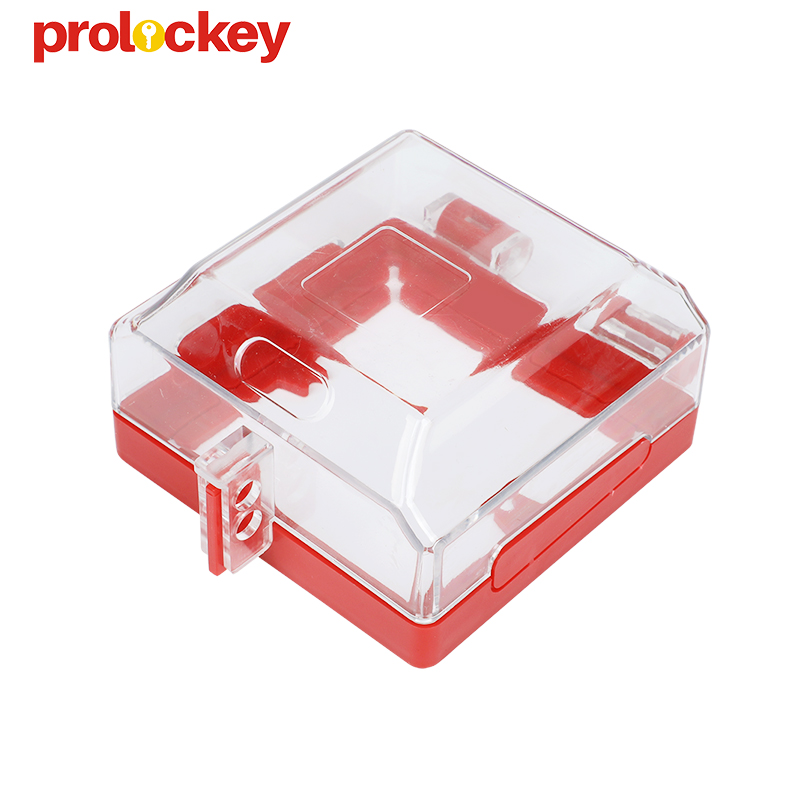
The plug lock is locked onto the equipment side. It encases the power plug that comes with the equipment and after pulling the plug out of the socket, it wraps the plug with a cover and locks it, creating a physical barrier between the plug and the socket. All of this happens on the “tail” of the equipment, while the circuit breaker and distribution box, and upstream lines remain unchanged.
The circuit breaker lock is locked at the power supply end. It encases the circuit breaker handle in the distribution cabinet. Its function is to completely cut off the upstream power supply. Once this lock is applied, the affected range is usually not just one piece of equipment – the downstream of the same circuit breaker may be several machines, several circuits, or an entire area.
In other words, the plug lock is a “small cut-off” isolation, with a granularity as fine as a single piece of equipment; the circuit breaker lock is a “large checkpoint” isolation, with a granularity as coarse as a section of the distribution network.
The applicable equipment types are completely different.
The plug lock’s stage is mobile equipment with power cords. Electric tools, portable lighting, office appliances, and temporary power-feeding industrial equipment are all its “main battlefields”. These equipment share the characteristic that the power cord is on the equipment itself, the plug is controlled by the user, and power-off only requires unplugging the plug. The OSHA regulations clearly allow: when a device is powered by a plug and the plug is completely controlled by the operator, unplugging and locking the plug is a compliant isolation method, simple, direct, and does not require finding the corresponding circuit in the distribution cabinet.
The circuit breaker lock’s stage is fixed wiring equipment. Large motors, control cabinets, fixed machines, workshop main distribution, floor main switches – these equipment either have no plugs or the plugs are locked by the equipment itself, and the only isolation method can return to the upstream circuit breaker. Locking the circuit breaker in the distribution room or on-site electrical cabinet is the most common electrical isolation method in industrial environments.
The “distance sense” of verification is different.
Whether one can “see” the isolation after locking is another difference between the two locks.
The physical isolation of the plug lock is very intuitive – the plug is pulled out, the lock cover is wrapped around it, and there is a clear gap between the plug and the socket. As long as the lock cover is in place, no one can plug the plug back in. This “visible sense of security” allows the plug lock to confirm the isolation effect almost without additional electrical testing (but please note that capacitive equipment and scenarios with residual charges still require electrical testing).
The isolation of the circuit breaker lock is “indicative” – the handle is in the OFF position, and the lock mechanism is stuck, logically indicating that the power has been cut off. However, the handle position does not equal the contact state. If the contact is welded or the handle mechanism jams, the OFF-circuited circuit breaker may still be conducting. Therefore, after locking the circuit breaker, before starting work, it is necessary to use a qualified test lamp to measure zero voltage at the equipment terminal. The plug lock can omit this step, but the circuit breaker lock cannot.
Who locks it and who is in charge, the ownership is different.
Plug locks are mostly in the hands of the operator themselves. The plug is bound to the equipment and follows the operator, the operator is the owner of the lock, locking is to lock oneself, and they unlock themselves after the work is completed, in a closed-loop manner. This “built-in lock” mode makes the ownership of the plug lock naturally clear.
The ownership of the circuit breaker lock is much more complicated. One circuit breaker may power multiple pieces of equipment, multiple teams share the same section of the distribution bus, and the number of personnel, contractors, and shifts are all intertwined. In this situation, who will lock the door, who will unlock it, whether it is possible to lock multiple cabinets together, and whether to use a lock box for management, all of these issues must follow the procedures for group locking or collaborative locking. A simple lock represents a whole set of organizational management protocols.
The choice of granularity determines the combination of the two locks.
Whether to choose a plug lock or a circuit breaker lock depends on two judgments: first, does the equipment have a plug; second, does the operation only involve this one piece of equipment. The former determines the tool selection, and the latter determines the scope of influence.
More complex sites often require the use of both locks simultaneously: the operator uses a plug lock to protect the equipment at the equipment side, and at the upstream end, uses a circuit breaker lock as a main switch protection; or vice versa, the circuit breaker lock has already cut off the main power supply, but the operator still adds another lock to the plug as a pure physical barrier (although this approach seems redundant, it conforms to the enhanced protection spirit of OSHA 1910.147(e) regarding “prohibit restoring energy before the operation is completed”).
Post time: Sep-12-2026


