

The 7-step LOTO standard operating procedure cannot be omitted in any step.
Based on the GB/T 33579-2017 standard and the on-site practical experience, we have compiled a standardized 7-step LOTO procedure. Each step has clear operation requirements and precautions, and it can be directly followed without any additional disassembly.
Step 1: Identify risks, ensure everyone is informed Before starting the operation, all relevant personnel must be notified in advance – including equipment operators, control room staff, team leaders, and personnel from adjacent positions. Clearly inform them about “which equipment, which part, at what time, and what kind of maintenance is being carried out” to ensure that irrelevant personnel are aware that the equipment is about to enter the maintenance state and avoid accidental operations. At the same time, identify all dangerous energy sources of the equipment comprehensively, such as the main power supply of electrical equipment, branch power supplies; hydraulic system valves; pneumatic system valves; steam pipes’ steam valves; and residual energy of the equipment (such as unreleased pressure, suspended components’ gravity), and register them one by one to ensure there are no omissions. Key points: Only notifying the operators, ignoring the control room staff, led to the control room mistakenly triggering the equipment startup; missing residual energy, such as the hydraulic system not being depressurized, resulting in unexpected energy release during subsequent operations.
Step 2: Standardize shutdown, operate according to regulations It is strictly prohibited to perform emergency shutdowns (unless there is an emergency danger). The equipment must be shut down gradually according to its established shutdown procedures: first, stop the equipment operation, close the relevant operation switches, wait for the equipment to completely stop running (such as the motor stopping, mechanical components remaining stationary), and then proceed to the next step. For example: In a workshop for centrifugal pump maintenance, the correct approach is: first, close the outlet valve → stop the pump operation → close the inlet valve, wait for the pump body to completely stop running, rather than directly pulling the switch to cut off the power supply, to avoid damage to the pump body or accidental release of residual pressure.
Step 3: Physical isolation, completely cut off energy This is the core step of LOTO – for each identified dangerous energy source, take physical isolation measures to ensure that the energy cannot be transmitted to the operation area. Common isolation methods include: electrical system: disconnect the main power switch, branch power switches, and remove the power plug (for portable equipment); hydraulic/air pressure system: close hydraulic valves, airway valves, and if necessary, install blind plates (to prevent valve leakage); steam/liquid pipeline: close valves, install blind plates, release residual media in the pipeline; mechanical components: use pins, barriers to fix suspended components (such as forks, mechanical arms), to prevent gravity from causing a fall. Key points: Only closing the operation panel switch, without disconnecting the main power supply; not installing blind plates after closing the valves, resulting in valve leakage and unexpected energy release.
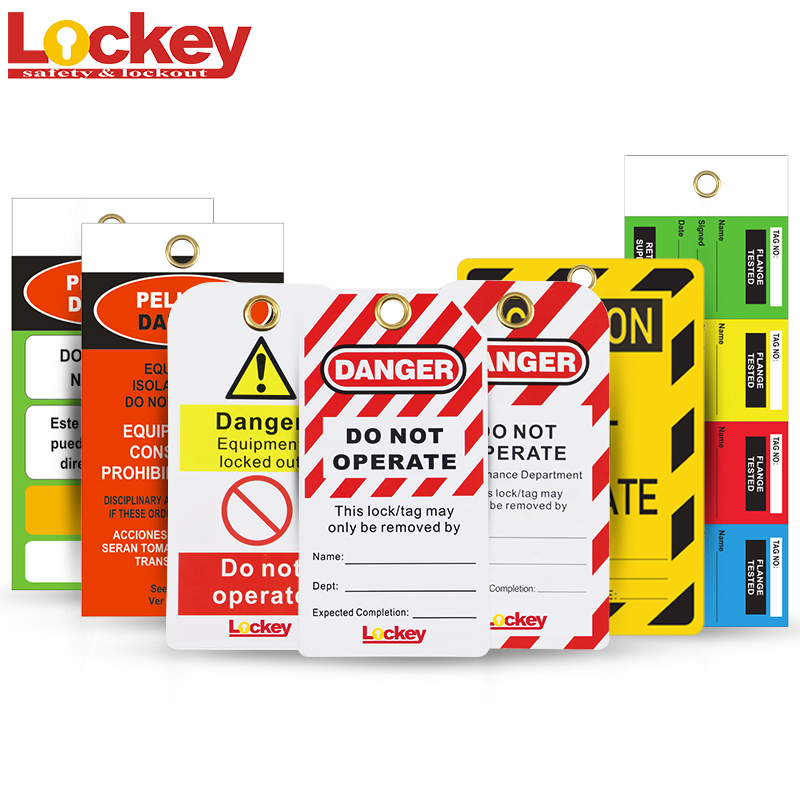
Step 4: Lockout tagout, clarify responsibilities After isolation, immediately lock and tag each isolation point (such as power switches, valves), the core of this step is “one person one lock, clear responsibilities”.
Step 5: Release residual energy, eliminate hazards After physical isolation, there may still be residual energy inside the equipment (such as residual electrical energy, hydraulic pressure, air pressure, residual heat), it must be completely released and blocked to ensure the equipment is in a “zero energy state”: electrical equipment: after closing the switch, press the equipment start button to verify no response, and check the voltage reading is zero; hydraulic/air pressure system: open the pressure relief valve to release the residual pressure in the system, wait for the pressure gauge to show zero, then close the pressure relief valve; high-temperature equipment: wait for the equipment to cool down to a safe temperature to avoid burns; mechanical components: manually check the suspended components to confirm they are firmly fixed and there is no risk of falling. Key points: Skipping the residual energy release step, thinking “power off is fine”, resulting in unexpected release of residual energy, causing casualties.
Step 6: Isolation verification, confirm safety This is the most easily overlooked but the most crucial step – after releasing the residual energy, it must be re-verified to ensure the isolation is effective and the equipment cannot be started. Correct approach: The operator personally attempts to start the equipment (such as pressing the start button, turning the operation lever, opening the valve), confirm that the equipment has no response; at the same time, check the locks, tags at each isolation point, whether the residual energy release is complete, whether the pressure gauge, voltage reading are zero, only when all are confirmed without error, can start the maintenance operation. Key reminder: During the verification process, it is essential to ensure that no other personnel are present in the work area to avoid accidental activation (if there is residual energy) during the verification, which could cause injury; after the verification is completed, all controllers must be reset to ensure that the subsequent equipment returns to normal operation.
Step 7: Release and restore, after the standardized unlocking and maintenance are completed, do not unlock randomly; follow the following procedures without any mistakes: Clean up the site: Check the work area to ensure that all tools, parts have been retrieved, no debris is left, the equipment components are installed properly, and the protective devices have been restored; Personnel count: Confirm that all workers have evacuated the work area and no personnel are left behind; Notify relevant personnel: Inform the operator, the central control personnel, and the team leader that “The maintenance is completed and the unlocking and restoration will be carried out shortly”; Unlocking principle: Strictly follow the “Who locks, who unlocks” principle; Personal locks should be removed by the individual themselves; It is strictly prohibited for others to replace; For collective locks, all workers must remove their personal locks before the operation supervisor can unlock uniformly; Restore the equipment: Remove the isolation tools (such as blind plates, pins), restore the valves and switches to the normal position, then conduct equipment trial operation to confirm that the equipment operates normally without abnormal noises, leaks, etc., and this is considered the completion of the entire LOTO process. Supplementary: If the work is not completed, the workers need to temporarily leave; It is necessary for the supervisor or the replacement personnel to re-lock and label before the original workers can remove their locks; During shift handover, the person handing over cannot directly remove the locks; The person taking over must lock and label before the person taking over can remove their own locks; If the equipment stops running for more than 8 hours, the supervisor is responsible for lockout tagout.
Post time: Apr-02-2026


