

“I Thought He Had Gone Home”: Inside a Serious Injury Caused by an Unauthorized Lock Removal
At the moment the padlock came off, the energy state of the machine did not change. What changed was that the fact “there is still a person inside this machine” had been erased.
The following scenario is a composite reconstruction drawn from several similar incidents. Details have been merged, but the logic in each of the real cases was strikingly identical.
What Happened
Before the end of the night shift, a press in a machining shop needed to be returned to production. Three personal padlocks hung on the lockout hasp: one belonging to technician A, one to technician B, and one to operator C.
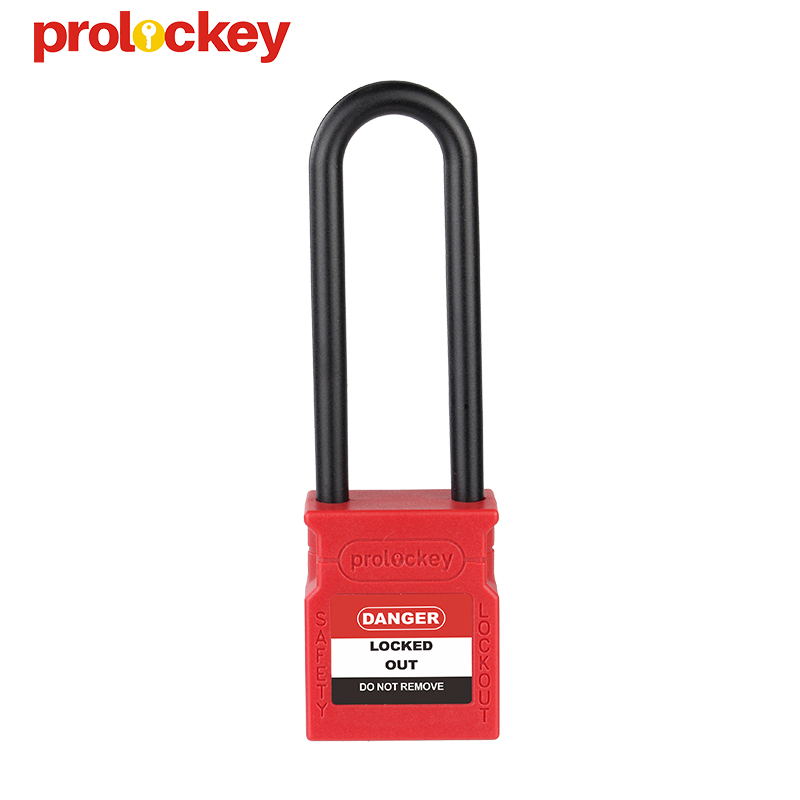
At shift handover, A and B were present and removed their own locks. The third lock belonged to C, and C was not there. The shift leader looked at the clock, decided C had already gone home, opened that lock with the spare key kept in the shop, and gave the instruction to restore power.
What was actually happening: C had been clearing a material jam and was leaning into the press bed, upper body inside the machine. His padlock was still on the hasp — the protection he considered most reliable.
The machine started. C was seriously injured.
The shift leader’s own words were: “I thought he had gone home.”
Three Errors Hidden in That Sentence
The first is substituting assumption for confirmation. Believing someone has left and confirming someone has left are entirely different things. The former requires only a thought; the latter requires seeing the person, hearing a response, or checking a record.
The second is substituting experience for procedure. C normally did leave on time. But that “normally” did not hold on the day of the incident, and the only mechanism capable of protecting C was precisely the lock that was opened.
The third, and the fundamental one, is that the shift leader’s objective was to get production running again, not to confirm that everyone was safe. Motivation drives behavior. When the goal is efficiency, procedure becomes an obstacle. When the goal is safety, procedure is the baseline.
What the Regulations Say
OSHA 1910.147(e)(3) leaves no room for interpretation: each lockout and tagout device shall be removed only by the authorized employee who applied it. GB/T 33579 states the same principle of “whoever locks, unlocks.”
The only exception is emergency removal when the person who applied it is genuinely not available. That path is subject to conditions so strict that missing one makes it a violation:
One, confirm absence — through attendance records, position verification, and a physical search of the site together, not through impression. Two, make every effort to contact the individual, repeatedly and through multiple channels, with time, method, and result fully recorded. Three, have the removal carried out by a person designated in writing by the employer, not by just any coworker or supervisor. Four, independently verify the zero energy state before removal — and where the key is not available, the correct action is to cut the padlock off with bolt cutters, never to use a master key or a spare key. Five, afterward, ensure the individual is informed, and tell them the status of the machine before they return to their station.
In this case, the shift leader met none of the five.
Why “Helping Out” Is the Most Dangerous Kind
Of all lockout/tagout violations, removing someone else’s lock is probably the one with the kindest motive. Nobody intends harm. People just want things to keep moving.
But good intentions do not grant exemption. The physical meaning of a padlock is “my person is in there.” Taking that lock off is a third party declaring “I have judged that he is not in there.” That is a judgment nobody is entitled to make on another person’s behalf.
This is also why the industry holds to an iron rule: a padlock costs tens of yuan; the cost of one unauthorized removal cannot be calculated. A cut lock can be replaced. A person cannot.
The Three Things That Should Actually Have Happened
If you are the one who needs a lock removed: finding a coworker’s lock still in place with that person absent, your first response should be contacting them and contacting the supervisor — not figuring out how to open it.
If you are the one who might not be on site: realizing you forgot to remove your lock, call the supervisor immediately. Never assume a coworker will take it off for you.
If you are the supervisor: that spare key should never exist in the shop in the first place. Something that opens every lock in the plant is a time bomb in itself — it reduces the protective effect of every personal lock to zero simultaneously.
Post time: Oct-29-2026


