

Electrical LOTO Locking and Tagging – Selection of Plug Locks
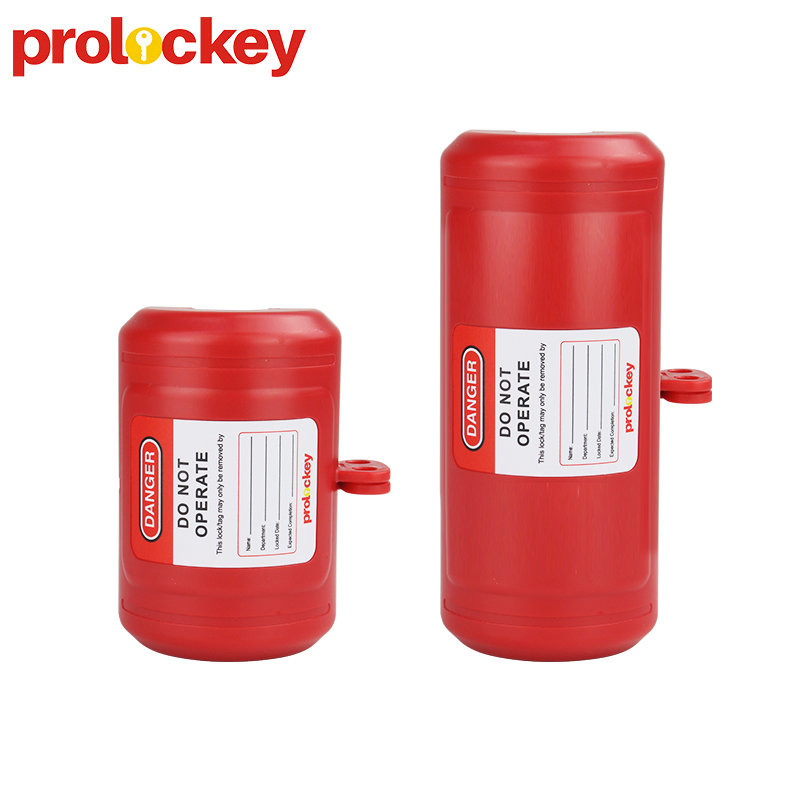
In industrial production sites, the safety protection during equipment maintenance and repair is a core aspect of enterprise safety management. The LOTO (Lockout/Tagout) locking and tagging system is the “key defense line” that blocks dangerous energy, prevents equipment from being mistakenly started, and protects the personal safety of workers. According to data, some of the reasons for equipment maintenance accidents are related to the absence or improper implementation of the LOTO process. Among them, accidents and equipment damage caused by incorrect unplugging or plugging of electrical plugs and devices are not rare. The plug lock, as one of the locking devices for isolating electrical energy sources in LOTO, is directly related to the standard selection and correct application of industrial plugs, and is a key content known in the field of industrial safety. This article will analyze different types of plugs from a LOTO professional perspective, introduce and recommend methods, and answer common industry questions to help enterprises standardize the implementation of the LOTO system and build a solid industrial safety defense line.
I. Ordinary Industrial Plugs
Industrial plugs in the production site are not the same as ordinary household plugs. They carry high-power and high-voltage electrical energy and directly connect to the power sources of various production equipment. The core reason for locking is to implement the LOTO locking and tagging system, physically blocking dangerous energy and effectively preventing human errors, essentially to safeguard the life safety of workers and standardize enterprise safety management.
II. Waterproof Industrial Plugs
Waterproof industrial plugs are typically used in humid, water-rich, outdoor, and harsh industrial environments. Specific application scenarios include:
1. Outdoor operation scenarios: construction sites, outdoor construction equipment (such as outdoor welding machines, temporary lighting), port and dock equipment, open-pit mining machinery; 2. Damp / Water-rich environments: chemical workshops, food processing workshops (cleaning process), sewage treatment equipment, power plant circulating water areas; 3. Dust + Damp Mixed Scenarios: metallurgical workshops, building material processing workshops, underground engineering operation equipment.
III. Aviation Plugs
Aviation plugs (also known as circular connectors) are a special type of industrial plugs with high reliability and high protection levels. They are mainly used in industrial scenarios with extremely high requirements for connection stability, anti-interference, and protection. Specifically, they include:
1. High-end industrial equipment scenarios: CNC machines, automated production lines, robot equipment, precision detection instruments, these devices have extremely high requirements for signal transmission and power connection stability, and aviation plugs can avoid connection failure caused by poor contact; 2. Harsh environment scenarios: aerospace supporting equipment, outdoor precision instruments, metallurgical and chemical high-end equipment, ship equipment, they have excellent anti-vibration, anti-shock, waterproof, and dustproof performance, and can adapt to extreme conditions; 3. Mobile equipment scenarios: industrial mobile robots, portable detection equipment, temporary precision operation equipment, aviation plugs are easy to plug and unplug and have a firm connection, suitable for equipment mobility needs.
IV. Photovoltaic Connectors and Data Connectors
⑴. Photovoltaic connectors (also known as photovoltaic connectors), specifically designed for photovoltaic systems, are mainly used in scenarios related to solar power generation, focusing on outdoor, high-temperature, and high-irradiation environments. Specific applications include:
1. Photovoltaic power station scenarios: centralized photovoltaic power stations, distributed photovoltaic power stations (factory rooftops, residential rooftops), used to connect solar photovoltaic panels with combiner boxes and inverters, transmitting the electricity generated by the photovoltaic panels, being the key interface for energy transmission in the photovoltaic system; 2. Outdoor photovoltaic applications: outdoor solar lighting equipment, photovoltaic monitoring equipment, portable photovoltaic power sources, suitable for outdoor complex environments, ensuring stable power transmission and resisting wind, high temperatures, and ultraviolet erosion; 3. Special photovoltaic scenarios: Building-integrated photovoltaics (BIPV) projects, photovoltaic water pump systems, off-grid photovoltaic systems, for the connection of various photovoltaic modules to ensure long-term stable operation of the system, and to meet the protection requirements for different installation scenarios.
⑵. Data connector (also known as signal connector), primarily used for transmitting data and signals rather than high-power electrical energy. It is suitable for industrial scenarios with high requirements for signal transmission stability and anti-interference capability. Specific applications include:
1. Industrial automation scenarios: automated production lines, PLC control systems, industrial robots, sensor equipment, used for transmitting control signals and detection signals to ensure precise coordination between devices and prevent production halt due to signal interruption;
2. Precision instrument scenarios: precision testing equipment, laboratory instruments, medical industrial equipment, used for transmitting high-precision data signals to ensure the accuracy of instrument testing and operation, suitable for clean and low-interference environments;
3. Communication and industrial control scenarios: industrial switches, industrial control hosts, remote monitoring systems, used for connecting various communication modules to transmit data information, ensuring normal communication of industrial control systems, suitable for the anti-interference requirements of industrial sites.
Post time: Mar-10-2026


